
The door lock is the first thing a guest interacts with in your hotel. A smooth tap-and-enter experience sets the tone for the stay; a fussy lock starts the guest journey with frustration. RFID door locks have become the Indian hotel standard, but the quality range between suppliers is enormous.
This guide covers everything procurement teams need to specify: card types, audit trails, PMS integration, battery life, and what separates a ₹4,000 lock from a ₹12,000 lock.
Card Technology: Mifare vs NFC vs RFID
Mifare Classic 1K cards are the Indian hotel industry standard. They're cheap (₹8-15 per card), reliable, and compatible with every major PMS system. NFC cards are newer and allow mobile-phone unlocking, but the infrastructure cost is 3x higher and most Indian guests still prefer physical cards.
Specify 'Mifare Classic 1K compatible' in your tender. This ensures compatibility with future PMS upgrades without replacing all your locks.
Audit Trail: Why 256 Entries Isn't Enough
Every door lock should record the last 256-512 access events (who opened, when, with what card). This data is critical for incident investigation — guest disputes, theft reports, staff access audits.
Budget locks store only 256 entries; premium locks store 512+. For a 100-room hotel averaging 8 openings per room per day, 256 entries cover only 3 hours. Always specify 512+ entry audit trail.
PMS Integration: The Deal-Breaker
Your door lock system must integrate with your Property Management System (PMS). In India, the most common PMS platforms are Oracle OPERA, IDS Fortuner, and eZee Absolute. Before buying any lock, ask the supplier for a written compatibility certificate for your specific PMS version.
At LaxRee, our RFID locks integrate with all major PMS systems via a standard TCP/IP interface. We provide free integration support during installation — something most trading-company suppliers cannot offer.
Battery Life: The Real Cost of Cheap Locks
RFID locks run on 4×AA batteries. A quality lock delivers 10,000+ openings per battery set (approximately 8-10 months in a standard hotel). Cheap locks drain batteries in 2-3 months, generating maintenance calls and guest complaints.
Specify 'minimum 10,000 openings per battery set' in your tender. Ask for the manufacturer's test certificate — if they can't provide one, they're reselling unbranded locks.
Finish: Brass vs Matte Black vs Chrome
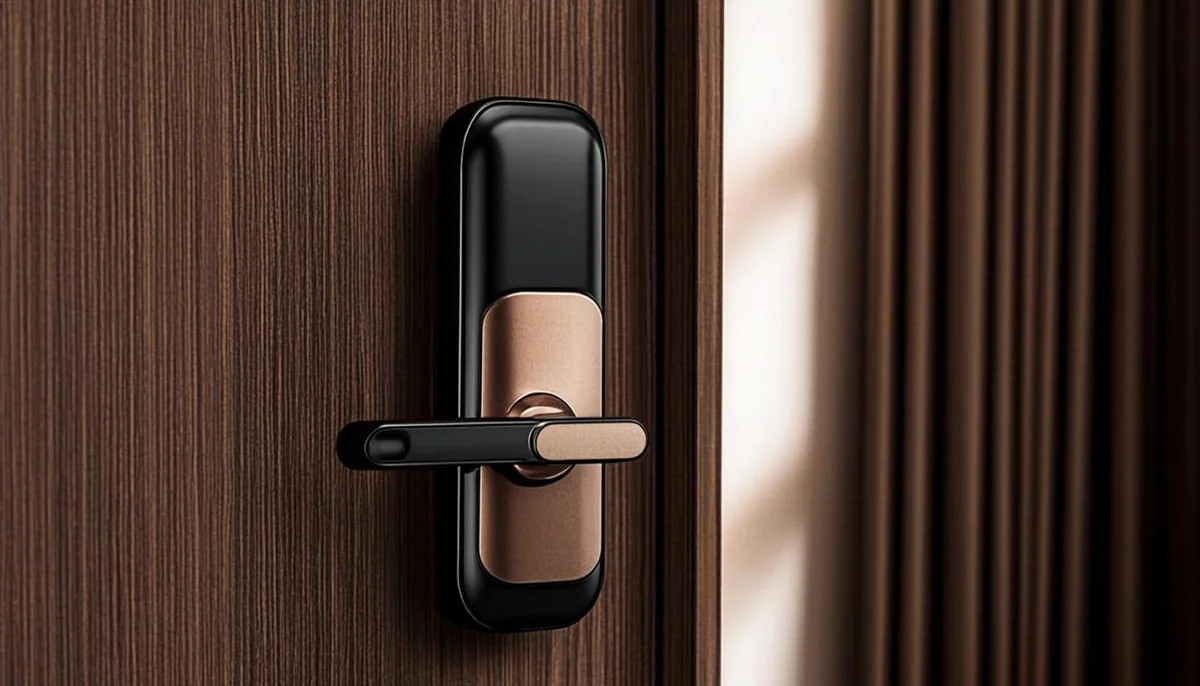
The finish of your door lock should match your room's hardware palette. Brass-finish locks (like LaxRee's) photograph well and read as premium. Matte black is modern and hides fingerprints. Chrome looks dated in 2026 — avoid it for new installations.
Always order a sample lock before committing to a bulk order. Check the finish under both daylight and warm LED lighting — some finishes look different under different color temperatures.
Pricing Benchmarks (India, 2026)
Budget RFID lock (Mifare, 256 audit, no PMS): ₹4,000-₹6,000. Standard RFID lock (Mifare, 512 audit, PMS-ready): ₹6,500-₹9,000. Premium RFID lock (Mifare + keypad, 512 audit, PMS-integrated, 3-year warranty): ₹9,500-₹14,000.
For a 100-room hotel, the price difference between budget and premium is ₹5-8 lakh. That's significant — but the cost of 2-3 battery replacements per year per room, guest complaints about faulty locks, and PMS integration failures will cost more over 5 years. Always buy standard or premium.